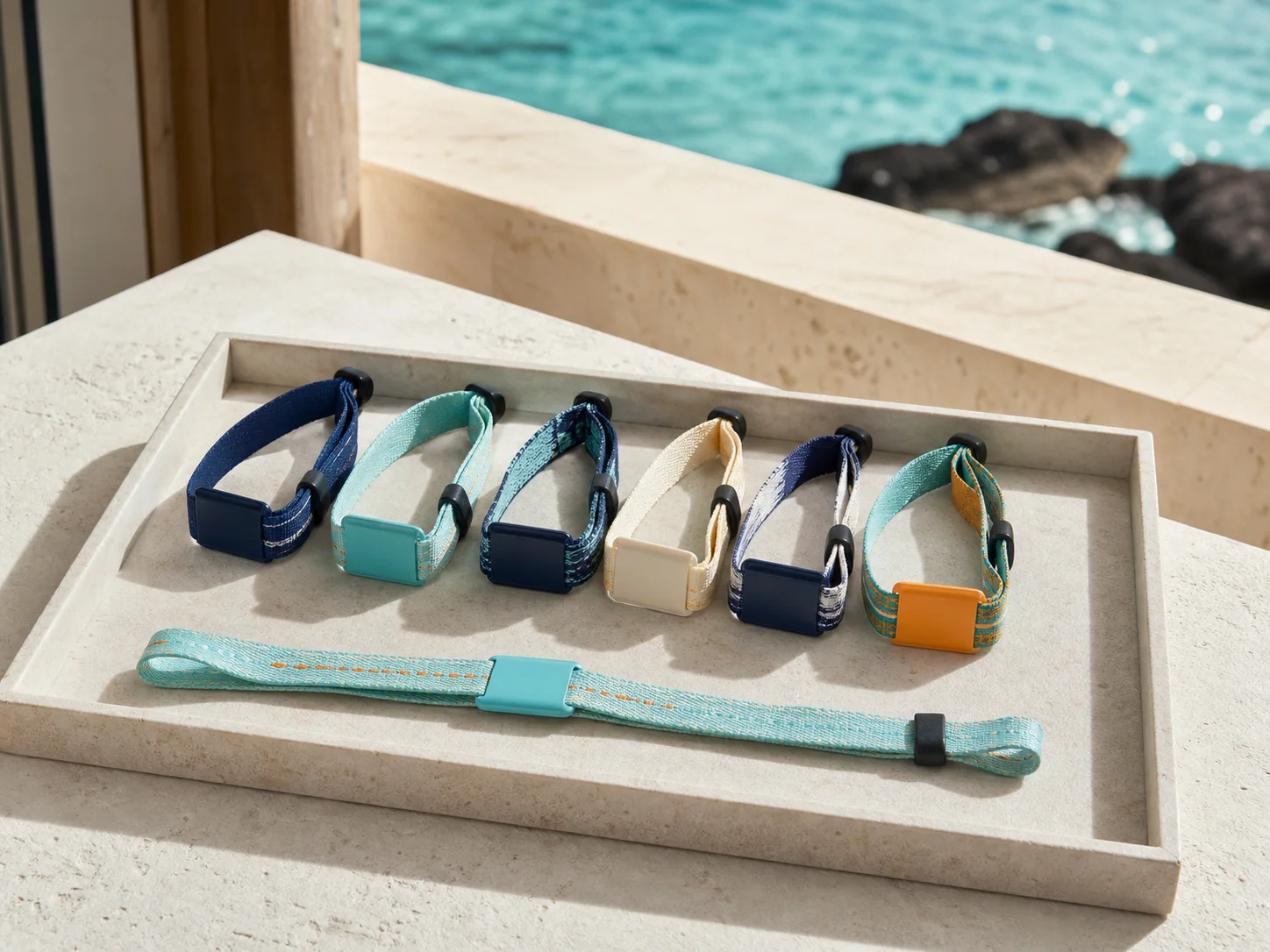
An RFID festival wristband is a woven textile band carrying a 13.56 MHz credential under ISO/IEC 14443, closed with a locking or adjustable fastener, and issued in counted, numbered sets. We produce them for Caribbean festivals, carnivals and multi-day events from 500 pieces, in 14 to 21 days after artwork approval. The band itself is the easy part. Entry rate, transfer policy, access zones, cashless payment and replacement handling decide the configuration, so we specify against the event plan before anything is woven.
Specify the queue, the wear period and the exception path.
A band is only one part of entry performance. Registration, staffing, readers, connectivity and failed-read recovery must be designed together.
Approve the textile, module, closure, artwork, numbering and pack sequence against the actual event plan.
Specification
Event wristband specification
Standard event and festival wristband platform
Credential frequency
13.56 MHz, ISO/IEC 14443
Chip tiers
Entry HF, standard HF, high-security HF or AES-secure HF — tier selected from the confirmed system requirement
Body material
Woven textile
Closure
Non-transferable or adjustable closure directions selected by event policy
Wear period
Single event or defined multi-day period
Customisation
Woven or printed artwork, colour variants, sequential numbering
Issue control
Counted and sequenced packing by variant
Minimum order quantity
500 pieces
Production time
14–21 days after artwork approval
Compatibility
Confirmed against the installed system, credential and encoding requirement before production
Figures describe the standard product platform. Chip tier, finish, closure and delivery scope are confirmed per property; compatibility is never assumed from the table alone.
Closures compared, because the closure is the policy
The fastener is where your transfer policy becomes physical. Choose it from the rule you intend to enforce, not from the catalogue picture.
Closure types compared
One-way locking slider
Adjustable slider
Sewn fixed loop
Transfer control
Tightens only; removal means cutting the band
None; can be loosened and passed on
Moderate; sized at issue, removal by cutting
Fit and comfort
Set once at the gate, worn for the duration
Guest-adjustable through the event
Fixed to the size sewn
Multi-day wear
Standard choice; stays on through sleep, showers and sea
Comfortable but defeats per-person ticketing
Workable, less common
Issue speed at the gate
Fast; slide and done
Fastest
Slowest; sizing at issue
Typical use
Ticketed festivals, paid zones, cashless events
Free community events, sponsor giveaways
Staff and crew identification
The one-way slider is the default for any event where the band represents money: a paid ticket, a drinks package, a stored-value balance. The adjustable slider exists for events where transfer does not matter and comfort or reuse does. Mixing them at one event is legitimate: locked bands for attendees, adjustable for vendors and press, with the colour and weave telling security which is which at a glance. Our wristband colour-coding guide covers building that visual system properly.
Matching the chip tier to what the band actually does
Every band in our range runs at 13.56 MHz. Within that, the chip tier should follow the job, and paying for the wrong tier in either direction is common.
Gate check only. If the band’s job is "valid ticket, one person, in or out", most access platforms enrol the band by its fixed serial number and check it against a list. An entry-tier HF chip does this completely. Nothing is written to the band; the intelligence lives in your ticketing system.
Zoned access. Backstage, VIP decks, artist areas. Still typically serial-number territory, with zones mapped server-side. The specification pressure here is operational, not cryptographic: more zones mean more reader points and more colour variants to keep security fast.
Cashless payment. The moment a band carries stored value or authorises bar tabs, the tier conversation changes. Payment platforms authenticate against protected keys on the chip, which calls for the high-security or AES-secure tier, and the platform vendor will state exactly which chip configuration they certify. We produce against that statement. If your cashless provider has not yet been chosen, choose it before the band order, not after. Bands woven for the wrong tier do not upgrade.
A regional data point worth knowing: cashless adoption in this region is being pulled by the cruise lines, whose NFC wearable programs have normalised tap-to-pay for Caribbean guests. We wrote about the port-side effects in our coverage of NFC wearables at Caribbean ports. Land-based festivals get the benefit: attendees arrive already trained.
Resorts hosting ticketed events face a related but separate decision: the wristband runs beside the room credential, not instead of it. The room side is covered on our RFID hotel key cards page, and properties ordering both at once save a specification round, since the system confirmation happens once.
One more configuration fact from real projects: some cloud access platforms enrol credentials by serial number only, whatever chip is inside. If yours is one of them, the entry tier is not a compromise, it is the correct specification, and the budget difference goes into spares and readers instead.
Entry throughput is designed, not hoped for
A band that reads in 100 milliseconds does not fix a gate that processes four guests a minute. The bottleneck at Caribbean festival gates is almost never the RFID; it is issue and exception handling. Three design decisions move the queue.
Pre-encoded, pre-sequenced stock. Bands arrive from us counted, numbered and packed in sequence by variant: general admission separate from VIP, in serial order. Gates that rip open mixed cartons and hunt for the right band type lose more minutes than any reader saves. This is why "counted and sequenced packing by variant" sits in our specification table rather than in the small print.
Separate the exception lane. Failed reads, lost bands, name-list problems and will-call belong at a desk beside the gate, not in the gate line. One unresolved exception parked in a scanning lane stalls everyone behind it. The maths is unforgiving at carnival scale: at 1,000 arrivals per hour, a single blocked lane for five minutes is 80-plus people deep before it clears.
Decide the replacement rule before doors. A guest at the exception desk with a cut band and a sunburn will get a replacement; the only question is whether your staff improvise the policy at 9 pm or follow one written at specification stage. Standard practice: cut band surrendered and matched against its serial, replacement issued from a reserved numbered block, old serial voided in the platform. That reserved block is part of the order quantity, which is why our checklist below asks for spares as a line of its own.
What a Caribbean event does to a wristband
Multi-day wear in this region is its own durability test, and it is the one we specify against.
Sweat and sea. A carnival band is worn through days of heat, ocean swims and afternoon rain. The woven textile and the sealed module take all of that; what varies is how artwork holds. Woven-in designs keep their colour for the duration. Printed satin bands are sharper for fine logo detail but earn their keep at shorter, drier events.
Sunscreen and insect repellent. The two liquids every attendee applies daily are also the two that stain light-coloured textile fastest. Dark ground colours with woven light artwork age visibly better across a week of wear. We raise this at artwork stage when a design arrives on a white ground destined for a five-day beach festival.
Heat at the gate. Fasteners sitting in cartons in the sun before doors behave differently from fasteners at room temperature. Trivial, but real: store issue stock shaded and the locking sliders set consistently.
The tan-line test. Guests wear these bands voluntarily for days after the event ends; in this region the band is souvenir as much as credential. That is a free brand channel, and it is the argument for spending artwork attention on a product that costs what a printed ticket never earned back.
Working back from the event date
Band production is 14 to 21 days after artwork approval. The event date does not move, so the planning question is when artwork must be final. Our working timeline for a Caribbean event:
Planning timeline for a Caribbean event
Weeks before doors
What must be done
8+
Access and cashless platform chosen; chip tier confirmed with the vendor
6
Quantities fixed per variant; artwork in internal approval
5
Artwork approved with us; production starts
2–3
Production complete; freight in motion
1
Stock on island, counted against the packing manifest
Doors
Issue desks stocked in sequence; exception block reserved
Two regional notes on that table. Air freight into the major Caribbean hubs lands within days; smaller islands add a leg and deserve the extra week. And from June through November, hurricane season makes every freight schedule provisional. Events in that window should hold stock on island a week earlier than feels necessary, because the year you cut it fine is the year a port closes.
For quantities, order attendance plus a margin. Our baseline is 5 to 10 percent over confirmed attendance for single-variant events, plus the reserved replacement block; multi-variant events add margin per variant because VIP running out cannot borrow from general admission.
Before you order, confirm these ten things
Event dates and wear period. Single day, weekend or full carnival week changes the material conversation.
Access and cashless platform. Named, with its credential requirement stated by the vendor, before the chip tier is fixed.
Chip tier. Entry tier for list-checked entry, AES-secure tier where the vendor certification demands it.
Closure policy. Locking, adjustable, or a mix by attendee type, decided from your transfer rule.
Variants and zones. How many band types, and how security tells them apart at speed.
Quantities per variant, plus margin. Attendance, overage, and the reserved replacement block.
Artwork, on the right ground colour. Approved internally before it reaches us; approval starts the clock.
Numbering and packing sequence. Serial ranges per variant, packed in issue order.
Replacement rule. Written before doors: surrender, match, void, reissue.
Freight and the island buffer. Stock on site at least a week out, two in hurricane season.
An organiser who arrives with items 2 and 3 answered has removed the only specification step that can genuinely stall an order.
Questions and answers
Questions organisers ask us.
01
What is the minimum order and lead time?
500 pieces, produced in 14 to 21 days after artwork approval, plus freight to your island. Total project time from approved artwork to stock on site is realistically four to five weeks; see the timeline above.
02
Can one band handle entry, zones and bar payments?
Yes, and this is the standard configuration at cashless events: one credential, with entry and zones checked by serial and payment secured on the chip. The cashless vendor certifies a specific chip requirement, and that requirement leads the specification, so name that platform first.
03
Do the bands survive the sea?
The credential module is sealed and the woven textile is unaffected by swimming; bands are routinely worn through multi-day beach events, ocean included. Artwork longevity depends on woven versus printed construction, which we match to the event length.
04
Can bands be reused for the next event?
Locked bands, no. Removal means cutting, by design. Adjustable bands can physically be reused, but serial numbers stay enrolled in your platform history, so reuse trades away audit cleanliness. For annual events we price fresh bands with updated art; the band-as-souvenir effect is worth more than the reuse saving.
05
What happens when a guest loses a band?
Your written replacement rule happens. Ours as a default: reserved numbered block for replacements, old serial voided at reissue, cut bands surrendered where they exist. We pack the reserve block separately so the issue desk finds it without unpacking general stock.
06
Can you match our sponsor brand colours?
Woven artwork works from thread colours matched to your brand references, and we state plainly at proof stage what the weave will and will not hold. Fine gradients and very small type are where woven art has limits, and printed bands cover those cases.
07
How late can we change quantities?
Until artwork approval, freely. After production starts, an increase means a second run with its own 14 to 21 day clock and its own freight, which at event timescales usually means it will not land in time. Set quantities with margin at approval; the checklist above exists to make that the easy path.
08
Do you also supply the readers?
No. Readers, gates and software come from your access or cashless platform, and that separation is deliberate: it keeps our specification honest, because we produce to the platform’s published requirement rather than selling you a closed system.
Event wristband library / 05
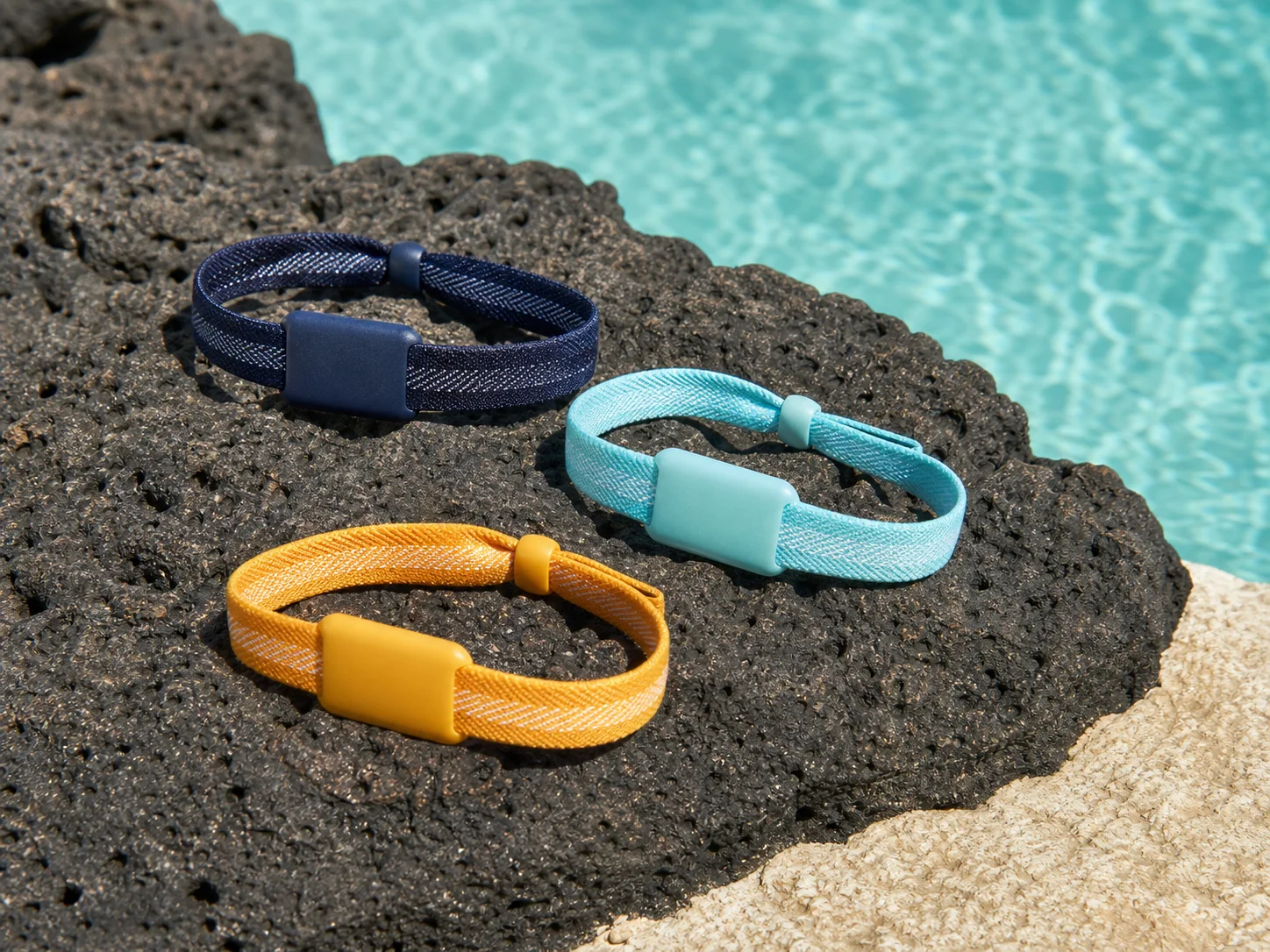
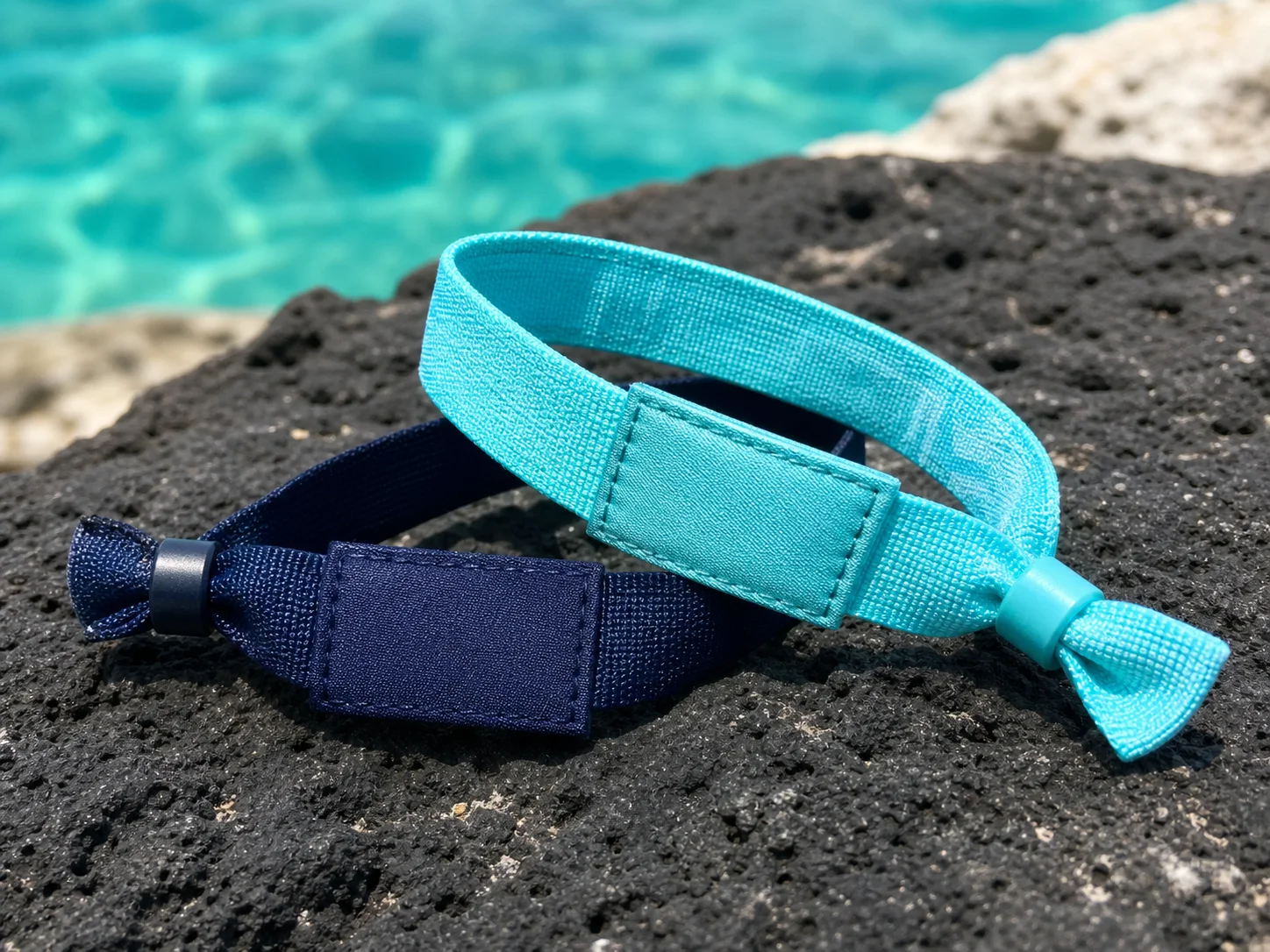
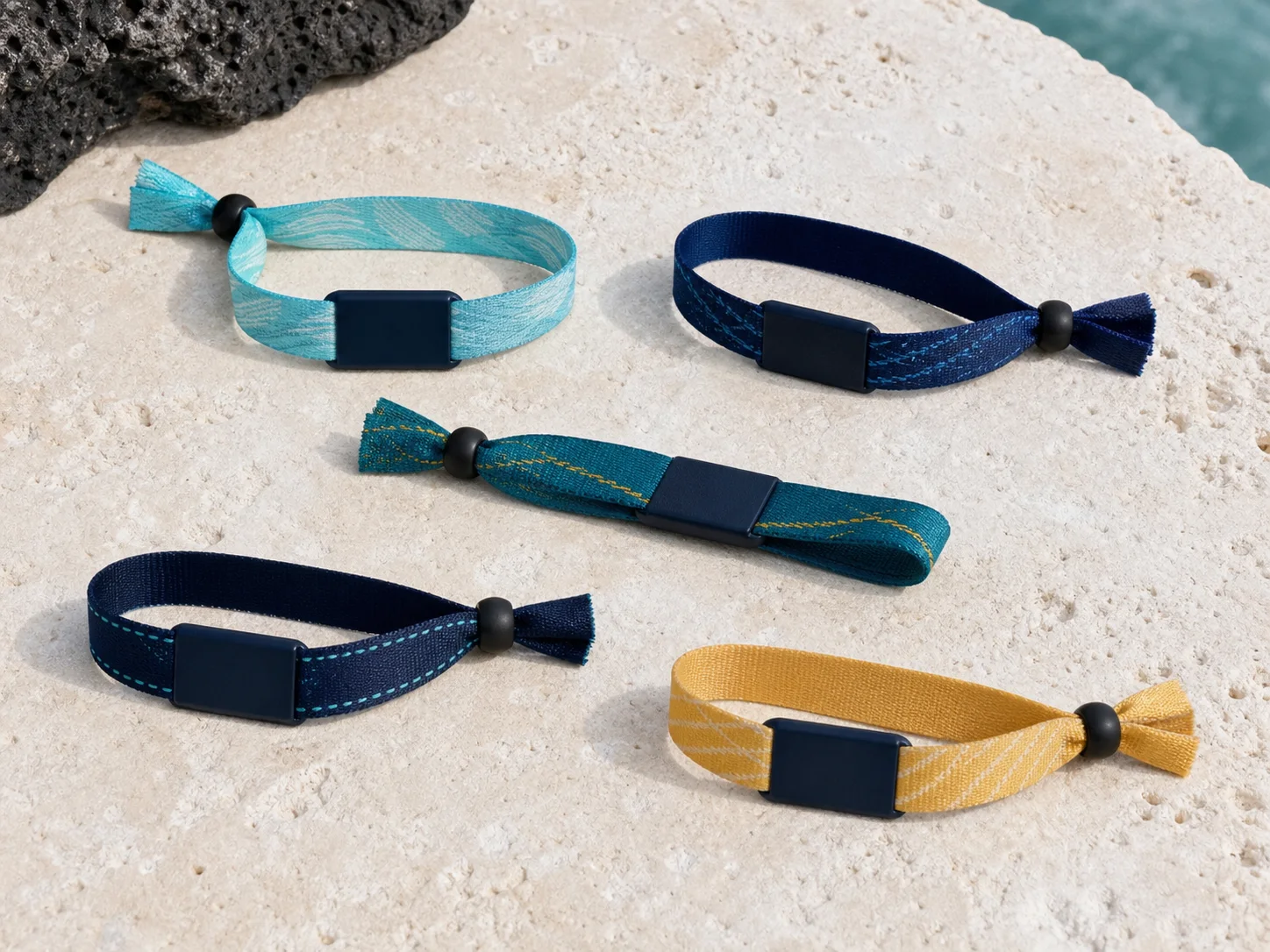
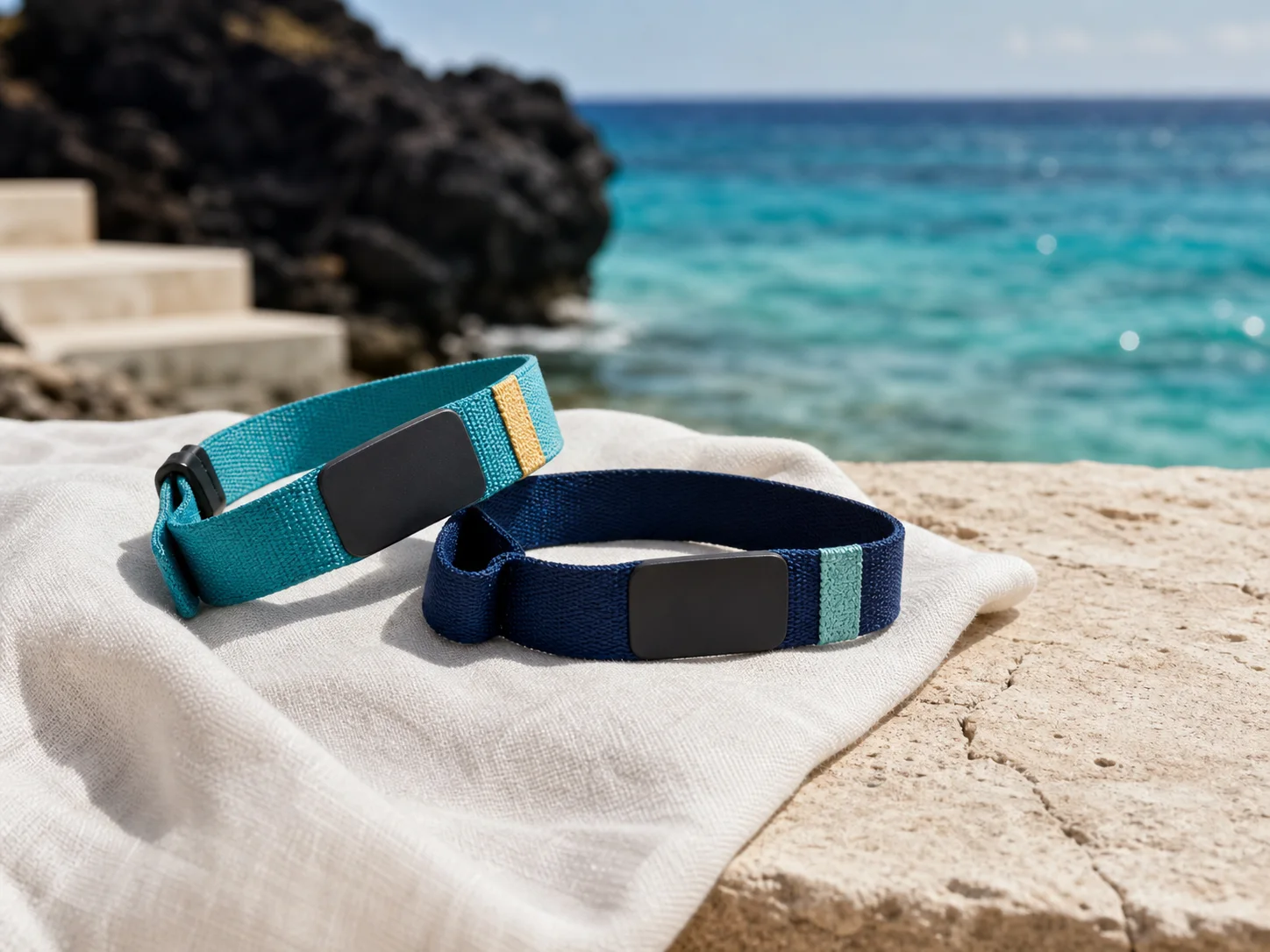
Woven for a defined stay. Five operational views.
Five unbranded fabric directions show the product family, weave, closure, presentation and issue control. Event performance remains workflow- and specification-dependent.
Start with the property, use case, destination and what is known about the installed access environment.
Three controls before release. Each stage is reviewed separately so an attractive product direction never substitutes for technical or operational confirmation.