PRODUCT / NFC CARD
Paper-based fibre direction
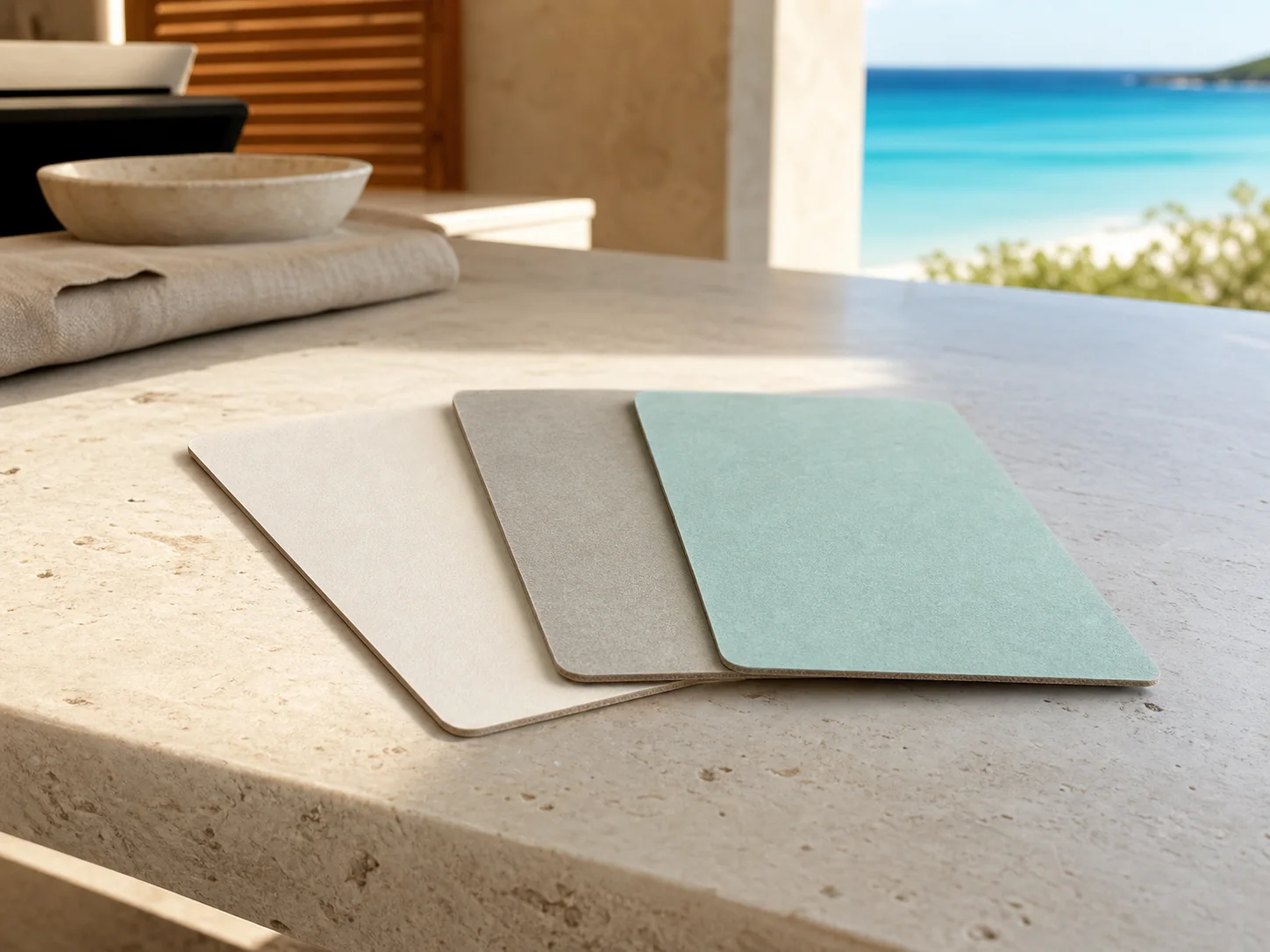
A tactile card-body direction for controlled contact handoff. Final NFC construction, fibre source, durability and end-of-life claims require documentation.


Contact handoff / Product
NFC cards with a clear digital destination.
The physical card starts the interaction; the maintained landing page, fallback contact route and device testing determine whether it remains useful.
Start with your property ↗Decision framework
Confirm supported device behaviour and credential construction, then keep the tap location and printed instruction clear.
Use a stable HTTPS destination with an accountable owner, accessible content and privacy-aligned measurement.
Specification
| Card format | CR80, 85.6 × 54 mm |
|---|---|
| Card body thickness | 0.76 mm |
| Credential frequency | 13.56 MHz, ISO/IEC 14443 |
| Chip tiers | Entry HF, standard HF, high-security HF or AES-secure HF — tier selected from the confirmed system requirement |
| Card body material | Paper-based fibre or recycled PVC |
| Printed fallback | Readable URL or contact route printed alongside the tap area |
| Destination | Customer-owned HTTPS page with a named owner |
| Minimum order quantity | 500 pieces |
| Production time | 14–21 days after artwork approval |
| Device behaviour | Confirmed by testing on representative handsets before release |
Figures describe the standard product platform. Chip tier, finish, closure and delivery scope are confirmed per property; compatibility is never assumed from the table alone.
NFC card library / 05
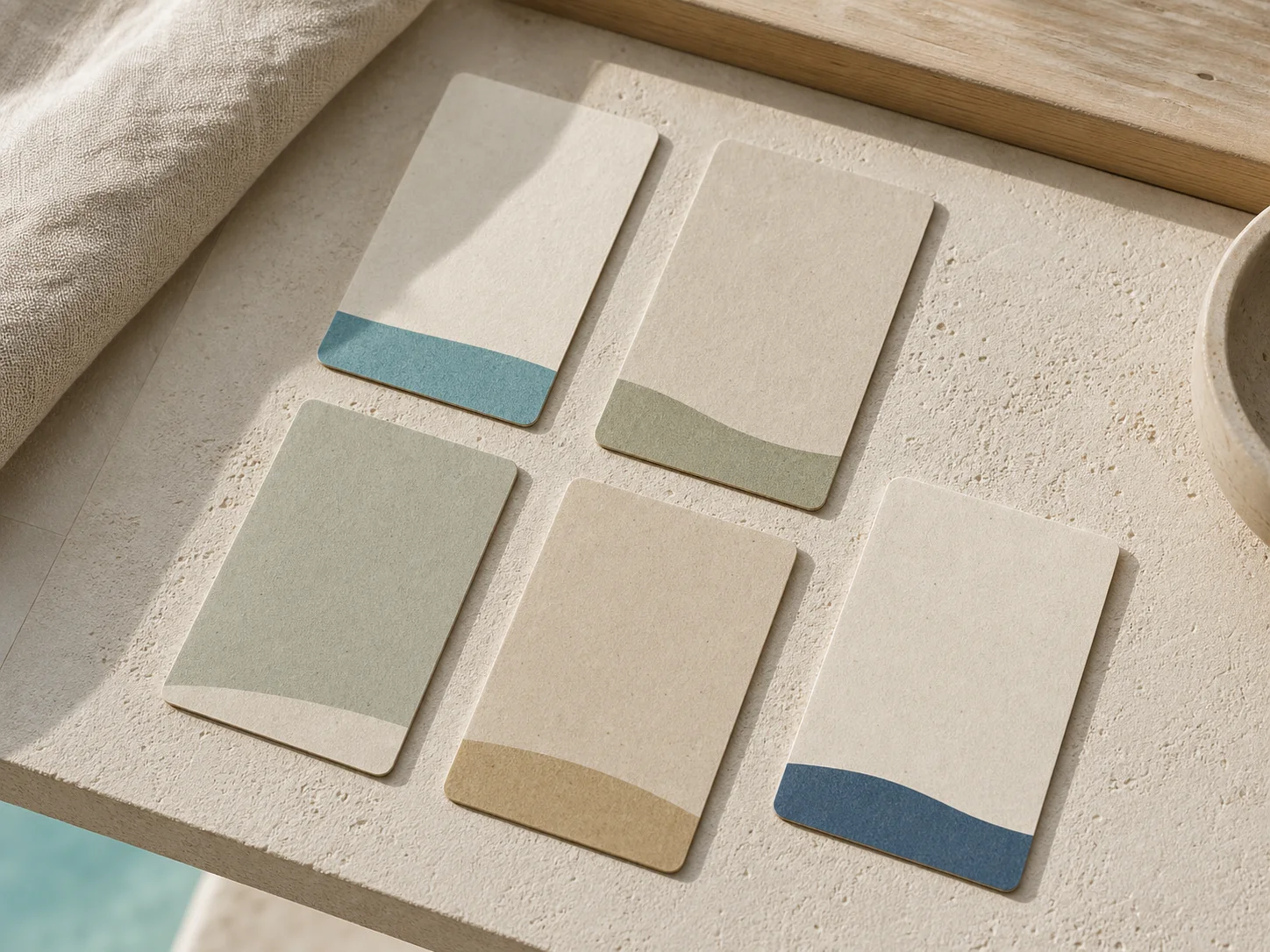
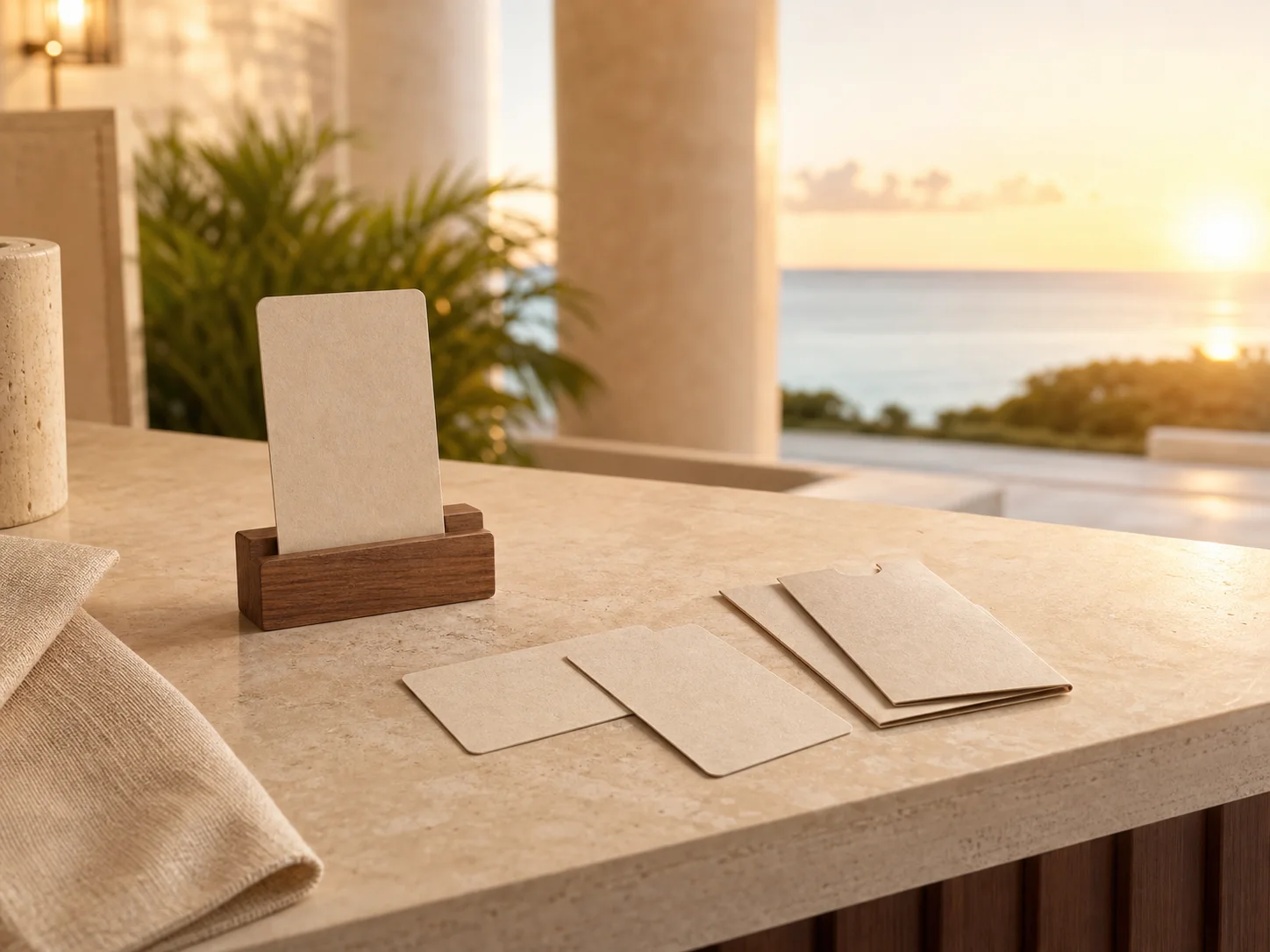
Five unbranded paper-fibre directions show card body, edge, print, sleeve and issue context. NFC construction, fibre claims and operating limits remain document-dependent.
Request the product brief ↗A tactile card-body direction for controlled contact handoff. Final NFC construction, fibre source, durability and end-of-life claims require documentation.
A tap is only useful when the landing page, printed fallback and device behaviour have all been approved.
Approve the secure page and update responsibility.
Test tap placement, print and edge construction.
Keep a readable URL or contact method on the card.
Start with the property, use case, destination and what is known about the installed access environment.
Three controls before release. Each stage is reviewed separately so an attractive product direction never substitutes for technical or operational confirmation.
Open the property brief ↗